

Unfiltered test of the new KTM 390 Enduro R 2026: benchmark chassis, 21-inch front and 18-inch rear spoked wheels, but that infamous 9-liter fuel tank (and a few other details) explains why many riders turn up their noses.
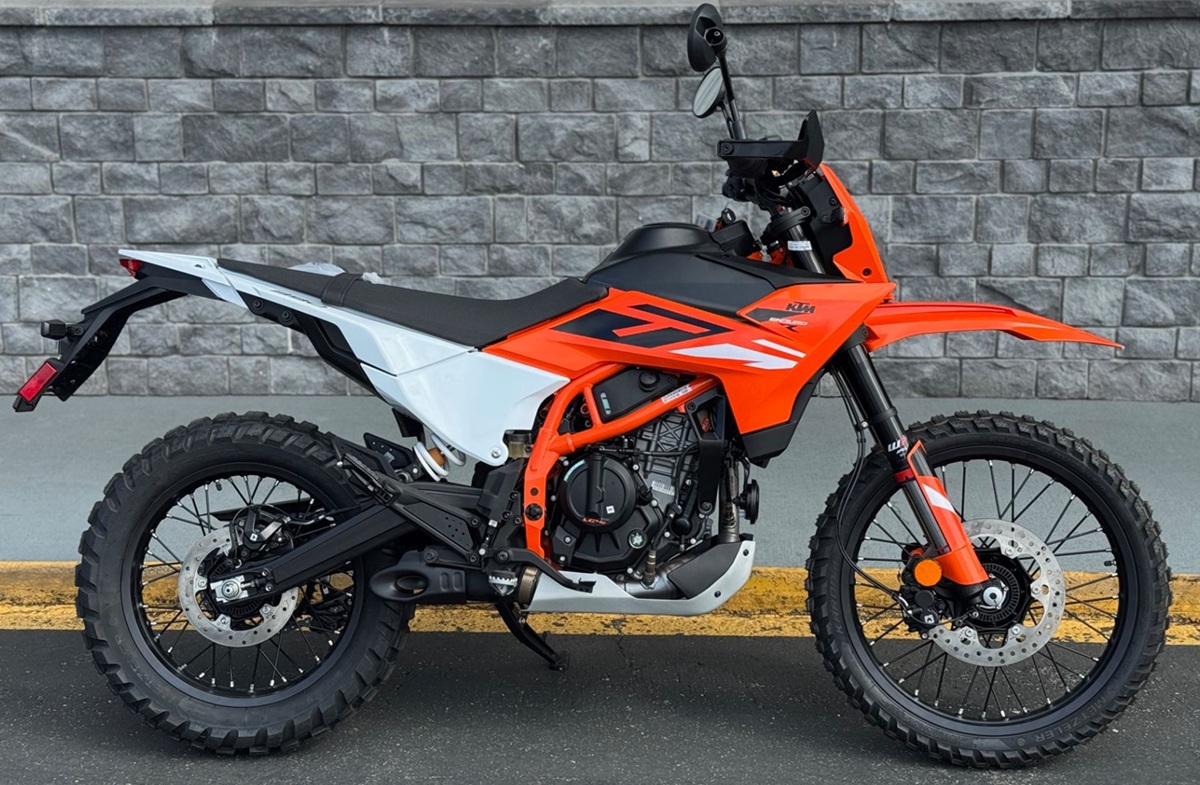
Enough with maxi-crossovers heavy as anvils that are only good for show outside the coffee shop, and enough with anemic dual-sports that choke on the very first steep incline. The middleweight knobby-tire segment was desperately searching for a fierce machine capable of joining hard-trail specialist traits with an everyday license plate. Mattighofen’s answer is named the KTM 390 Enduro R: powered by the ~400 cc LC4c single-cylinder engine, boasting class-leading suspension geometry, and backed by a bold promise.
We thrashed it without mercy across slick pavement, thick dust, and real rock gardens without granting the Austrian manufacturer any passes. Beneath the orange plastics lies an incredible toy, but one that carries structural limitations capable of holding back even the most enthusiastic rider.
⚡ THE BOTTOM LINE IN 3 LINES (For those in a rush)
Unforgiving Chassis: Long-travel WP suspension and 21" front / 18" rear spoked wheels. This is no disguised naked bike—it's a true enduro.
Engine Character: A punchy 45 HP single-cylinder that is eager and aggressive up top, but demands to be revved high and vibrates when pushed hard.
The Major Own Goal: A tiny 9-liter fuel tank that turns every remote getaway into an anxious hunt for gas stations.
1. Riding Position: Serious Stuff for Real Off-Roaders
Climbing into the saddle means accepting the ruthless rules of off-road riding: with an 890 mm seat height, if you are under 1.75 m (5'9") tall, prepare to touch the ground on tiptoes. But the second you stand up on the serrated steel footpegs, you understand why the Ready to Race label isn't just marketing fluff. The handlebar offers incredible leverage, the bodywork laughs in the face of briars, and the electronics package inherits tech straight from its larger siblings.
The only annoying flaw in the woods? Electrical wiring harness routing below the lower steering head stem is guiltily exposed: in thick mud or rock strikes, it risks avoidable damage. And forget two-up touring: the rear pillion seat section is an emergency-only perch, period.
2. WP Suspension: Serious Business (It Humiliates Maxi-Bikes)
It is the suspension department that fully justifies the bike's pedigree and price tag. Up front, a 43 mm WP APEX fork delivers a massive 230 mm of travel with 30 clicks of adjustment; out back, a WP shock operates through a progressive linkage.
Over loose rock beds and killer ruts, the bike floats with embarrassing composure. If you tackle serious boulder fields, a pro tip is to close front compression damping by 2 or 3 clicks to prevent sudden nose-dives under aggressive front braking. It stops, quite literally, only where a pure competition specialist would dare—with the advantage that you don't face nightmare race-engine maintenance intervals here.
3. LC4c Engine: 45 Angry Horses (With a Character Flaw)
The new single-cylinder pulls hard: 45 HP at 8,500 rpm and 39 Nm of torque. The Ride-by-Wire system is finally dialed in (the jerkiness of older 390 iterations is a faded memory) and both Street and Enduro engine maps work brilliantly, delivering traction even on slick surfaces. Real-world top speed touches 160–165 km/h, though highway wind blast will literally pull your helmet off due to zero aerodynamic protection.
The real drawback? To move fast for real, you must squeeze the engine high up in the rev range. And when you hold revs near the redline for extended periods, handlebar vibrations become tiresome. For technical off-roading, we would have preferred more low-end grunt rather than such a peaky high-rpm nature.
4. Frustrating Fuel Range: Why Only 9 Liters?
Now we arrive at the sore spot—the feature that causes riders to turn up their noses and curse. Putting a meager 9-liter fuel tank on a motorcycle built for trail riding and adventure exploration is a decision hard to swallow. Sure, fuel economy is excellent (mixed riding yields nearly 28 km/liter, dropping to 22 km/l on highways), but total range caps out around 240 km. This means planning every single trail ride with constant range anxiety as soon as you venture away from civilization.
The Unfiltered Crazywheels.it Verdict
"The KTM 390 Enduro R is not a bike for everyone, which is both its greatest strength and the commercial bottleneck holding back mass sales success. It makes no soft touring compromises: it features a formidable chassis that puts twin-cylinder adventure bikes to shame and an engine that wants to rev hard. Sure, that 9-liter tank is an insult to exploration and high-rpm vibrations grow tiring after an hour on pavement; but if you want a street-legal knobby bike capable of humiliating anyone through tight twisties, you've found it. Pack a fuel bladder in your backpack and enjoy the show."
Frequently Asked Questions (FAQ)
Q: How high is the seat on the KTM 390 Enduro R, and who can reach the ground easily?
A: The saddle sits at a tall 890 mm off the ground. It is a competition-oriented dimension requiring an average-to-tall rider (at least 1.75–1.80 m / 5'9"–5'11") to manage the motorcycle securely at stops or on slick surfaces.
Q: Can the bike be ridden on an A2 license?
A: Yes, perfectly. Delivering a rated power output of 45 HP (33 kW), it complies fully with European A2 license regulations.
Q: What is the real-world fuel range with the 9-liter fuel tank?
A: Considering a real-world average of roughly 27–28 km/l in mixed riding, total range settles around 230–240 km before running dry—a reasonable efficiency figure heavily penalized by the small tank volume during long-range transfers.