

KOVE 450 RALLY 2026: Test (Review), Pros and Cons. Real Top Speed
KOVE 450 RALLY 2026: Our Unfiltered Review. Performance, Issues and Opinions
How does the KOVE 450 RALLY 2026 actually perform? Find out in our exclusive test: we break down real-world performance, top speed, reliability, and everything that fell short of expectations.
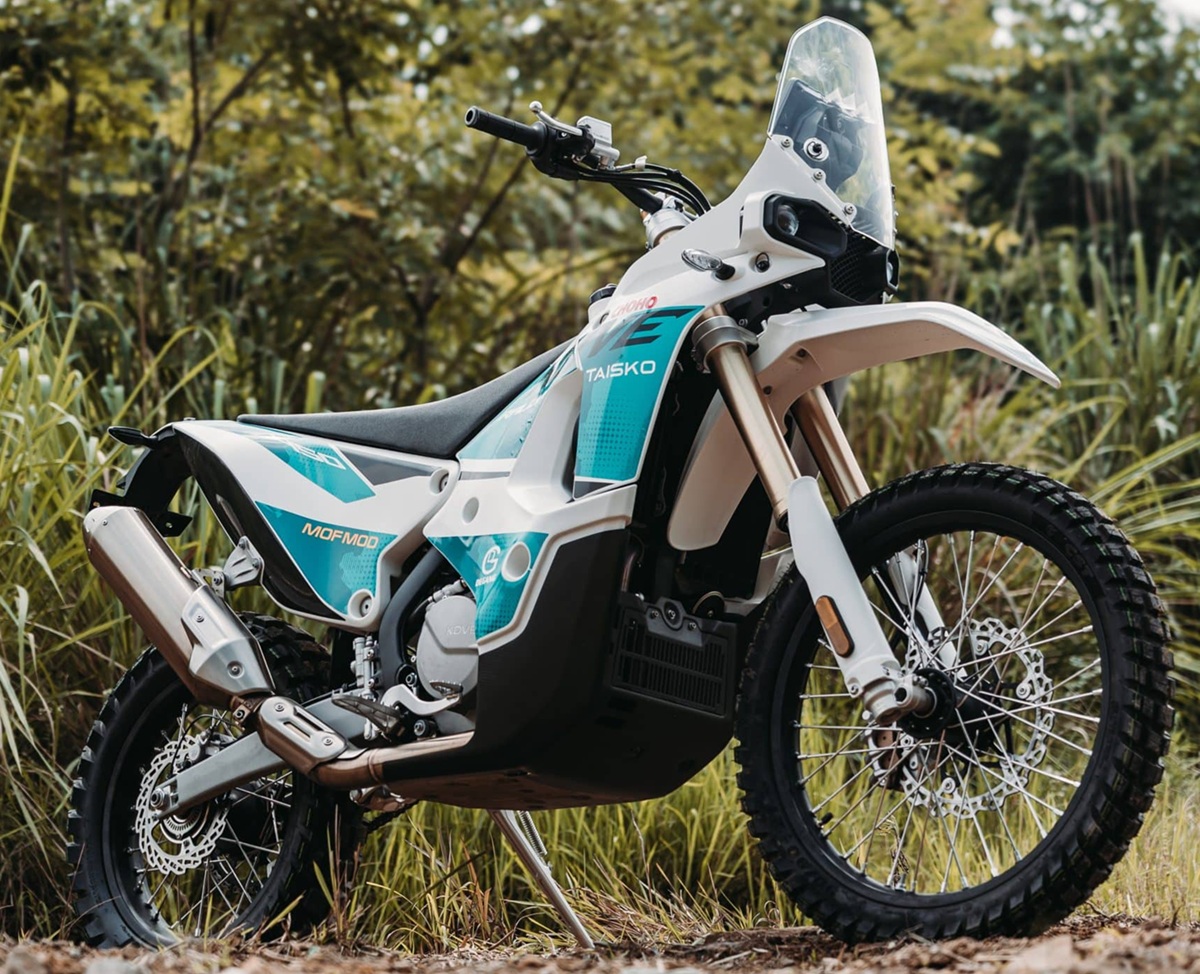
The KOVE 450 RALLY model year 2026 has firmly established itself in the international market as the only true road-legal, mid-to-small displacement single-cylinder specialist platform for Rally-Raids. This is neither a civilized street enduro nor a heavy dual-sport; it is a structural replica of the bikes engineered for grueling African raids. Its market positioning is highly strategic, occupying a niche completely devoid of direct competitors. It successfully distances itself from heavy, 200+ kg twin-cylinder bikes as well as from high-maintenance enduro singles whose service intervals are measured in running hours rather than kilometers.
KOVE 450 RALLY 2026 Review: Build Quality
The structural and aesthetic teardown of the KOVE 450 RALLY 2026 reveals a build quality that surpasses the average standards of similar Asian imports, putting it in direct competition with European manufacturing. The bodywork is crafted from highly flexible, high-resistance polymer plastics designed to withstand the twists and impacts typical of hardcore off-road riding, featuring panel fittings with tight and stable tolerances. The fuel tanks—split into three distinct compartments to optimize mass centralization—utilize racing-derived transfer pumps and quick-release couplings.
The electronic package features a vertical, roadbook-style color TFT dashboard that offers optimal readability even under direct sunlight. The braking system relies on dual-piston calipers upfront clamping down on wave discs, while the tangentially spoked wheels with reinforced rims are built to take a beating. The single biggest limitation in terms of everyday versatility is the native absence of passenger footpegs—a technical choice aligned with its hardcore off-road architecture, but one that must be carefully weighed at the time of purchase. While the retail price is not cheap in an absolute sense, the premium nature of its technical components (oversized radiators, billet triple clamps, carbon/fiber skid plate) fully justifies the investment.
KOVE 450 RALLY 2026 Review: Ergonomics and Riding Comfort
Rider
The saddle-footpeg-handlebar triangulation is modeled strictly after Rally racing specifications. The seat is completely straight and sits very high off the ground. This setup requires medium-to-tall riders (at least 175 cm) for safe static handling, especially since the center of gravity shifts noticeably upward when fully fueled. The upright riding position ensures excellent leverage over the handlebars and controls.
Wind Protection
The fixed, vertical front fairing effectively shields the rider's torso up to highway speeds. The airflow is deflected right over the helmet, minimizing neck strain, though the slim profile of the front section leaves the shoulders partially exposed to the elements.
Vibrations
As expected from a high-performance single-cylinder engine, high-frequency vibrations become noticeable through the footpegs and handlebar grips once you cross the 6,000 rpm threshold. However, the overall dampening remains perfectly tolerable for mid-range road transfers.
Heat Management
The layout of the side-mounted radiators funnels hot engine air directly toward the rider's legs. At low speeds or during technical, slow-speed off-road sections, this thermal extraction is pronounced and highly noticeable around the calves.
Passenger
The stock configuration completely rules out a passenger. The rear subframe design and the total lack of dedicated footpegs preclude two-up riding, reinforcing the bike's strictly solo mission profile.
KOVE 450 RALLY 2026 Review: Suspension
The suspension department relies on a beefy inverted front fork and a progressive rear linkage-assisted monoshock. Both units offer generous wheel travel and a comprehensive adjustment system for compression, rebound, and spring pre-load. The factory valving is firmly set, completely free of the structural wallowing or bottoming typical of budget dual-sports. The internal progression allows it to swallow high-speed corrugated terrain and deep ruts without any unexpected or harsh bottoming out.
The build quality of the axles and bushings ensures smooth stiction-free travel and reduces initial breakaway friction. While we are not dealing with factory-team works components, the hydraulic and mechanical baseline is superior to any competitor in its displacement class, delivering predictable behavior on both fast gravel straights and technical climbs.
KOVE 450 RALLY 2026 Review: Suspension Set-up Guide
The clickers on these click-adjustable units are highly responsive, and every single click alters the bike's dynamic behavior. To optimize performance, we recommend the following adjustments:
Novice / Slow Off-Road Set-up: Open up the compression clickers (both front and rear) by 4 clicks from the factory standard and slow down the rebound by 2 clicks. This allows the suspension to easily track low-speed trail chatter and reduces arm pump.
Fast Rider / Rally-Raid Set-up: Keep the factory baseline settings or back off/close the high-speed compression on the rear monoshock by 2 clicks to prevent the rear end from squatting during successive deep compressions.
Pure Street Use: Increase the rear spring pre-load to stabilize the bike's geometry and prevent excessive front-end dive under hard braking caused by weight transfer.
KOVE 450 RALLY 2026 Review: Braking and Traction Control
The braking hardware is sized to deliver the necessary modulation required on low-grip surfaces. The front lever has a calibrated initial free-play that prevents instant wheel lockups off-road, providing a progressive buildup of stopping power as you squeeze harder. The dual-channel ABS is tuned for mixed-surface duty.
On asphalt, the anti-lock system triggers frequently on the front wheel if you are running aggressive, knobby off-road tires due to their reduced contact patch. Off-road, the system can be deactivated to allow the rider to lock the rear wheel, which is essential for backing the bike into tight corners. The motorcycle is completely devoid of electronic traction control—a choice fully aligned with rally philosophy, leaving rear-wheel spin management entirely up to the rider's right wrist.
KOVE 450 RALLY 2026 Review: Engine, Performance and Top Speed
Top Speed
The real top speed recorded by onboard GPS equipment hovers around 170 km/h. This figure is highly dependent on rider aerodynamics and the rolling coefficient of the fitted off-road knobbies.
Acceleration
The single-cylinder engine delivers a very linear acceleration curve. Power delivery is heavily focused on the midrange, where the engine responds crisply to throttle inputs without any lag.
Engine Smoothness and On-Off Effect
At low revs (under 3,000 rpm), a minor on-off throttle snatch is noticeable, which can be attributed to strict electronic fuel injection mapping designed to clear emissions regulations. The phenomenon completely vanishes as soon as you ride aggressively and keep the revs in the midrange.
Heat
The thermal architecture vents a substantial amount of hot air through the bodywork louvers. During urban commuting or when tackling tight mule tracks in low gears, the increase in temperature felt by the rider is significant.
6th Gear Roll-on from Idle
Sixth gear acts strictly as an overdrive. Trying to roll on from low speeds requires dropping down one or two gears; below 3,500 rpm, the engine chugs and shudders, requiring a feathered clutch to clean up the delivery.
General Performance
The engine outputs a sensible, non-stressed peak power figure in favor of long-term mechanical durability. It truly shines on mixed, technical off-road tracks. Its power limits only show up on long, hard-packed high-speed straights where you would naturally find yourself wanting more displacement.
KOVE 450 RALLY 2026 Review: Engine Tuning Guide
The ECU does not feature handlebar-selectable engine maps that fundamentally alter the torque curve. The most effective modification to optimize engine response lies in the mechanical management of the final drive ratio. For purely technical and enduro-style riding (mule tracks and steep, rocky climbs), we highly recommend installing a rear sprocket with two additional teeth compared to stock. This mod shortens the gearing, cleans up the first-gear on-off jerky response, and allows you to carry third gear through flowing sections without overheating the clutch.
KOVE 450 RALLY 2026 Review: Gearbox Functionality and Issues
The six-speed transmission delivers positive, precise shifts when clicked decisively at medium-to-high revs. At lower engine speeds, the lever action can feel a bit mechanical and notches. Throughout our testing, we experienced no clutch slippage or false neutrals between the upper gears. The only real functional annoyance is finding neutral when coming to a stop with a hot engine—a process that often requires rolling the bike slightly back and forth or giving the throttle a quick blip. The cable-actuated clutch shows excellent resistance to fading under heavy slipping, keeping its engagement point consistent.
KOVE 450 RALLY 2026 Review: Handling, Stability and Safety
In the City
In urban traffic, the KOVE leverages its massive ground clearance and tight turning radius to slice through congestion. Road hazards like speed bumps and potholes are soaked up effortlessly. The main drawback remains the towering seat height during stop-and-go commuting.
On Country Roads
On twisty pavement, the bike tips into corners with surprising ease and predictability. Turn-in is rapid due to the bike's low curb weight, but you need to maintain a smooth, flowing line to compensate for the limited cornering grip of the stock dual-sport tires.
On the Highway
On highway stretches, straight-line stability is acceptable, though the front end tends to feel light once you cross 130 km/h, especially when caught in traffic turbulence or crosswinds. Long-distance highway stints at legal speeds are doable but heavily bottlenecked by the firm, narrow dirt-bike seat.
Mountain Passes
On tight, paved alpine switchbacks, the bike relies on its midrange torque to pull smartly out of slow corners. Structural inertia is minimal, allowing for rapid transitions, provided you are willing to manage a significant amount of front-end dive under hard braking.
Two-up Riding
Not applicable due to the total absence of passenger footpegs and lack of dual-occupancy homologation.
Off-Road: Motocross Track
On a motocross track, the bike's layout betrays its extra weight compared to a true 450 race bike, alongside its bulky rally fairings. It will handle moderate jumps and tabletops, but only if you stiffen up the suspension clickers to their firmest settings.
Off-Road: Mule Tracks
On loose rock and rugged trails, the KOVE 450 RALLY hooks up with relentless traction. The overall balance allows it to crawl over loose boulders and ruts with significantly less physical effort than a heavy, 1000cc twin-cylinder adventure bike.
Off-Road: Downhills
Downhill control is made easy by the excellent standing ergonomics, which let you lock your knees into the chassis and weight the pegs while leaning your torso back. The excellent modulation of the front brake prevents front-wheel washouts.
Off-Road: Uphills
The engine's linear tractability in the midrange prevents the rear wheel from spinning uselessly in loose mud or slick clay. Traction is top-tier, allowing you to conquer steep inclines while holding third gear.
Off-Road: Hard Enduro
This is outside its intended design envelope. The wide front fuel tanks and the fixed navigation tower severely restrict your immediate view of the front tire when maneuvering through extreme rock gardens and downed logs, where the bike pays a penalty compared to a 110 kg specialist enduro machine.
KOVE 450 RALLY 2026 Review: Fuel Consumption
Flowmeter data gathered during our extensive testing yielded the following average fuel consumption figures:
Mixed Extra-Urban / Highway Cycle: 18 km/liter
Economic Tarmac Riding: 20 km/liter
Specialized Off-Road / Rally Use: 14 km/liter
Thanks to the massive total capacity of its split tanks, the real-world riding range easily clears the 400 km mark, aligning perfectly with the demands of long-distance rally competitors.
KOVE 450 RALLY 2026 Review: Summary of Pros and Cons
Pros:
Genuine Rally-Raid chassis architecture and aggressive geometry.
Fully adjustable, high-spec suspension that holds up under abuse.
Massive riding range courtesy of the three independent fuel tanks.
Excellent weight-to-performance ratio for serious mid-to-high level off-road riding.
Cons:
Long-term reliability of the electrical harness is still statistically unproven.
Sparse dealer and service network across several European regions compared to mainstream brands.
Immediate availability of specialized spare parts is bottlenecked by importer shipping timelines.
Resale value on the used market is highly susceptible to steep depreciation due to brand obscurity.
Jerky on-off throttle response at low RPMs during slow-speed technical riding.
"Crazywheels" Opinion & Recommendations
The editorial team at Crazywheels considers the KOVE 450 RALLY 2026 a motorcycle of unique and highly specialized character. Do not buy this bike if you are looking for a long-distance highway tourer or a daily tarmac commuter; it would be a technically flawed and economically inefficient choice. This platform belongs strictly in the hands of dedicated off-road enthusiasts who want to cover massive distances on dirt trails without the high-maintenance headaches of a racing single. Our professional advice is to verify the proximity of an authorized service center before finalizing your purchase.
KOVE 450 RALLY 2026 Review: Alternatives
KTM 690 Enduro R / GasGas ES 700: They pack significantly more horsepower and a bulletproof, ubiquitous dealer network, but require expensive aftermarket fairings and tanks to match the KOVE's out-of-the-box wind protection and fuel capacity.
Honda CRF300 Rally: Offers legendary reliability and rock-bottom running costs, but falls vastly short in terms of engine performance and suspension hardware (non-adjustable), making it unsuited for competitive, fast off-road riding.
Fantic XEF 450 Rally: A top-tier, ultra-premium specialist platform built around European racing components, but carries a massive premium price tag that places it in a completely different market tier.
KOVE 450 RALLY 2026 Review: Accessories and Upgrades
To optimize both the dynamic performance and trail reliability of the bike, we suggest the following targeted modifications:
Tire Swap: Ditch the stock rubber and install FIM-approved rally tires (e.g., Metzeler 6 Days Extreme or Pirelli Scorpion Rally) paired with heavy-duty foam mousses instead of inner tubes to permanently eliminate the risk of flat tires on the trail.
ECU Remapping / Exhaust: Fitting a lightweight aftermarket exhaust system combined with an injection tuning module irons out the low-end jerky on-off throttle response and significantly drops the heat buildup caused by the restrictive stock catalytic converter.
Frame & Tank Guards: Apply thick, clear protective vinyl graphics over the transparent flanks of the fuel tanks to prevent scuffs, scratches, and abrasions caused by constant knee contact when standing on the pegs.
KOVE 450 RALLY 2026 Review: Scheduled Maintenance Guide
Mileage Interval Required Mechanical Service Technical Inspection Notes
First 1,000 km First break-in service: engine oil change and filter replacement. Check torque on all chassis fasteners and wheel spokes.
Every 5,000 km Change engine oil (10W-50 Full Synthetic) and replace oil filter. Inspect, clean, and re-oil the foam air filter element.
Every 10,000 km Check and adjust valve clearances. Replace spark plug. Inspect chain sliders, guide wear, and steering head bearings.
Hard Off-Road / Racing Cut the lubrication fluid replacement intervals in half. Flush fuel tanks internally and clean the fuel pump micro-filters.
KOVE 450 RALLY 2026 Review: Known Issues
Technical feedback gathered from specialized workshops throughout 2026 points to a few recurring teething issues:
Neutral Position Sensor: The gear position sensor contacts are prone to moisture oxidation, which can cause the green neutral light on the dash to fail to illuminate even when the gearbox is physically disengaged.
Fuel Transfer Pumps: Occasional electrical binding of the secondary transfer pumps caused by debris left over inside the tanks during manufacturing; requires the proactive installation of fine-mesh inline fuel filters.
Skid Plate Fasteners: The mounting bolts securing the lower engine skid plate have a tendency to back out on their own due to engine harmonics; easily solved by applying a medium-strength thread locker (Loctite 243) during routine maintenance.
KOVE 450 RALLY 2026 FAQ
Is this bike A2 license compliant?
Yes, its maximum power output fits right within the legal European limit of 35 kW (48 hp), making it fully legal for A2 tier license holders.
Can the side fuel tanks be isolated individually?
Yes, the fueling system features independent mechanical petcocks, allowing the rider to manage fuel draw from specific tanks to fine-tune the bike's handling balance.
How often do you need to replace the piston under amateur use?
Unlike hardcore enduro race bikes that require top-end rebuilds every 100 hours, the KOVE engine is engineered to surpass 30,000 km before requiring an in-depth top-end inspection, provided routine maintenance is performed diligently.
KOVE 450 RALLY 2026: What Fell Short of Expectations
Our field testing revealed that the uncompromising choice to sell the bike without passenger pegs, combined with a hard, razor-thin racing seat, severely hampers its street utility, making highway transfers a test of physical endurance. The engine delivery below 3,000 rpm suffers from fueling hesitations that make tight, trial-like rock hopping or slow urban filtering unnecessarily finicky. Lastly, the financial investment required to buy one upfront runs head-first into the uncertainties of long-term resale value and the sparse availability of the brand's parts supply chain.